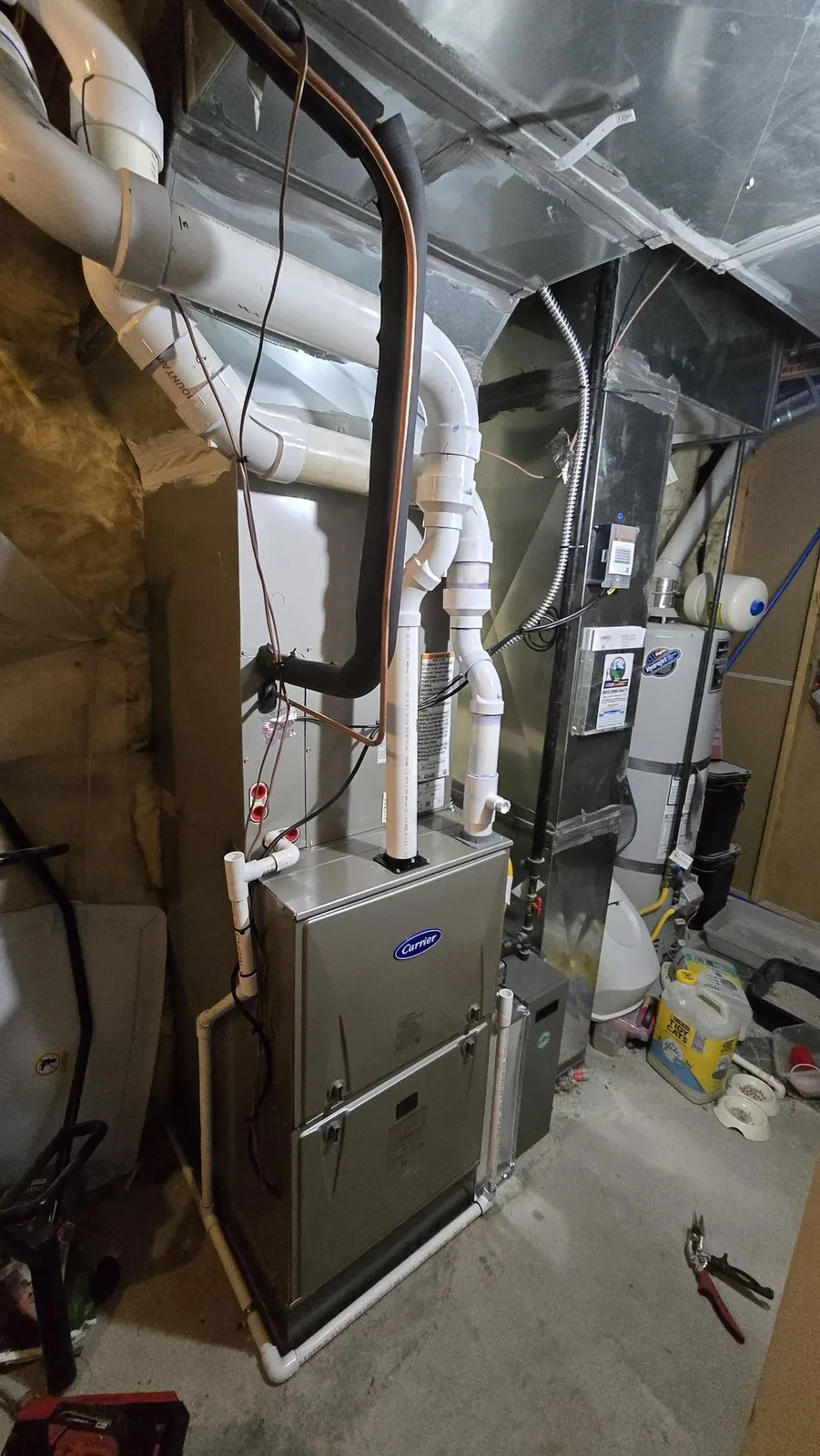
A furnace should run in steady cycles, usually several minutes or more at a time. If yours fires up, runs for a minute or two, shuts off, and starts again, that’s called short-cycling. It wastes energy, wears out parts faster, and often means something needs attention.
What you can safely check yourself
Start with these before calling for service.
1. The air filter
A clogged filter is the most common cause. When air can’t flow through the furnace, it overheats and a safety switch (the high-limit switch) shuts the burners off. Once it cools down, it starts again, and the cycle repeats.
Pull the filter out and hold it up to a light. If you can’t see light through it, replace it. Standard 1-inch filters usually need changing every 1 to 3 months, and more often during heavy use, with pets, or during winter inversions.
2. Blocked vents and returns
Make sure supply vents aren’t closed off or covered by furniture or rugs, and that return-air grilles aren’t blocked. Closing too many vents restricts airflow, just like a dirty filter.
3. The thermostat
A thermostat in direct sunlight, above a heat register, or near a drafty door can read the wrong temperature and turn the furnace on and off too quickly. Check that it’s mounted on an inside wall away from heat sources, and replace the batteries if it uses them.
4. The outside vent pipes (high-efficiency furnaces)
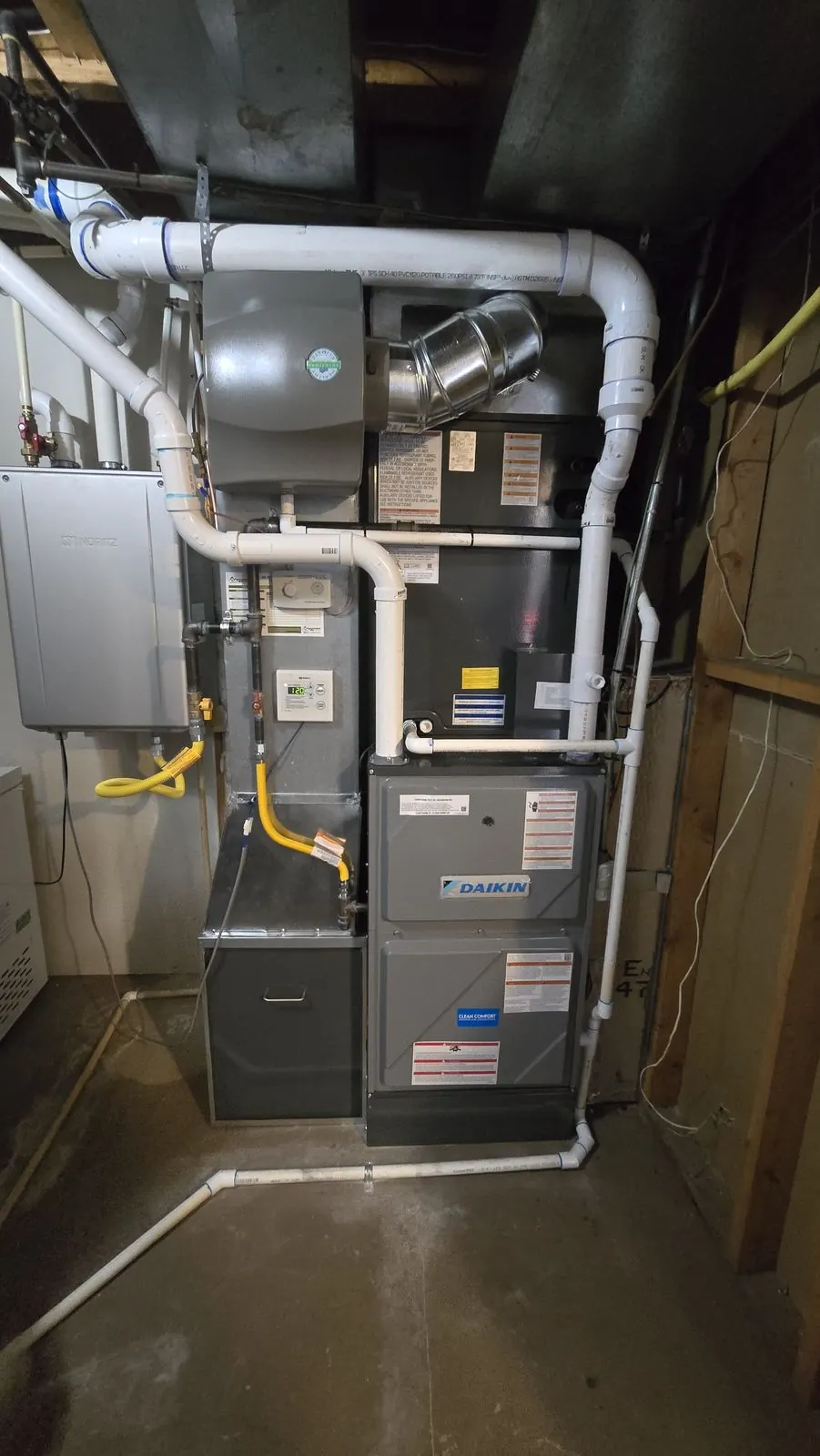
High-efficiency furnaces vent through two white PVC pipes on the side of the house. If snow, ice, leaves, or a wasp nest blocks them, the furnace will shut itself off for safety. After a Northern Utah snowstorm, it’s worth checking that they’re clear.
Causes that need a technician
If the simple checks don’t fix it, the problem is usually one of these:
- Dirty flame sensor. If the furnace lights and then shuts off within a few seconds, the flame sensor may be coated with residue and can’t confirm the flame. Cleaning it is a quick fix during a service call.
- Overheating from airflow problems beyond the filter, like a weak blower motor or undersized ductwork.
- A failing limit switch or pressure switch.
- Condensate drain problems on a high-efficiency furnace. A clogged drain line can trip a safety switch.
- An oversized furnace. A furnace that’s too big for the home heats the space too quickly, shuts off, and repeats. This is common when furnaces are replaced without a proper sizing calculation.
When to stop and call right away
- You smell gas: leave the house and call your gas utility’s emergency line or 911 from outside.
- Your carbon monoxide detector goes off.
- You see scorch marks, smell burning, or hear loud booms when the furnace lights.
For everything else, a short-cycling furnace usually isn’t an emergency, but it’s worth fixing soon. Constant starts and stops are hard on the igniter, the inducer motor, and the heat exchanger.
We can help
Elevate Heating and Air diagnoses short-cycling and other furnace problems throughout Ogden and Northern Utah. We’ll find the actual cause and explain what we found before any work begins.