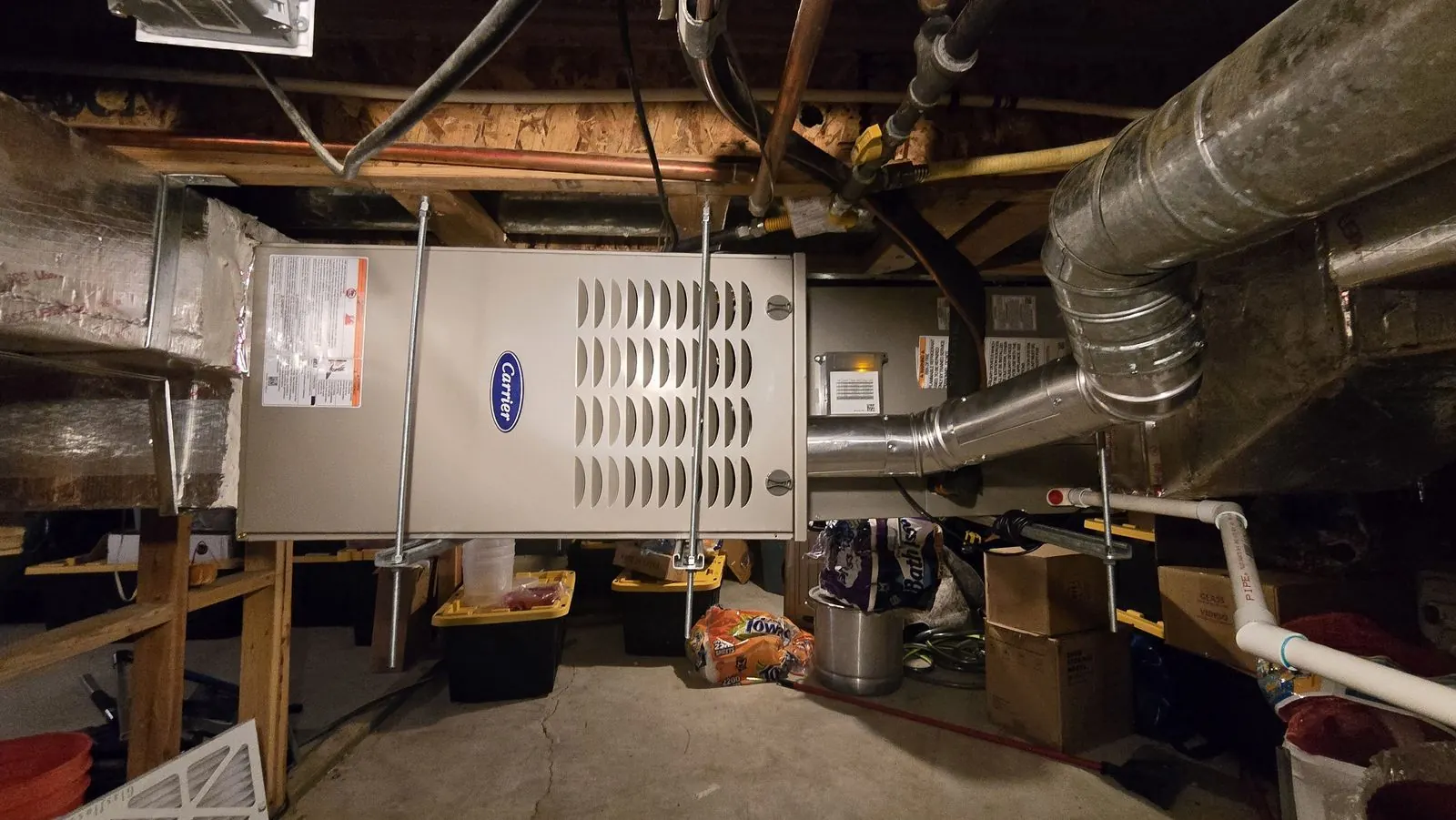
Every winter, cold air settles into the valleys along the Wasatch Front and traps pollution underneath it. These inversions can last for days, and the haze is hard to miss. Your furnace can’t clean the air outside, but the right filter, changed on time, makes a real difference inside your home.
What your furnace filter does (and doesn’t do)
Your furnace filter cleans the air that circulates through your home every time the system runs. It catches dust, pet hair, and pollen, and a good filter catches fine particles too.
It doesn’t pull clean air in from outside or fix outdoor pollution. Its first job is actually to protect the furnace itself by keeping dust off the blower and heat exchanger.
Which filter should you use?
Filters are rated by MERV, from 1 to 16. Higher numbers catch smaller particles.
- MERV 1–4 (thin fiberglass): protect the furnace, but do little for air quality.
- MERV 8: a solid everyday choice for most homes.
- MERV 11–13: catch much finer particles, including a lot of the smoke and haze that sneaks indoors. A good choice during inversions and wildfire season, if your system can handle it.
There’s a catch: higher-MERV filters are denser and restrict airflow. In some systems, especially with 1-inch filter slots, a very dense filter can make the furnace overheat and short-cycle. If you want a MERV 11–13 filter, a 4- or 5-inch media filter cabinet is usually the best way to get better filtration without choking your system.
How often to change it
- 1-inch filters: every 1 to 3 months, and closer to monthly during heavy winter use, inversions, or with pets.
- 4- to 5-inch media filters: usually every 6 to 12 months.
Set a reminder on your phone. A clogged filter is one of the most common reasons we see furnaces overheating in the middle of winter.
Simple ways to breathe easier during an inversion
- Keep windows and doors closed on red air-quality days.
- Run the furnace fan on circulate or “On” for a while to move more air through the filter.
- Don’t burn wood in fireplaces during inversions. Utah often restricts burning on poor air days anyway.
- Change the filter right after a long inversion or a smoky wildfire stretch.
- Consider a stand-alone HEPA air purifier for bedrooms if anyone in your home has asthma or allergies.
Get your system checked
A fall furnace tune-up is a great time to make sure your filter size and rating are right for your system. During maintenance, we check airflow, clean key components, and test safety controls, so your furnace is ready for inversion season.